Mathematical Training Designed Around Your Technical Goals
QF Academy develops the mathematics needed for AI, quantum computing, cryptography, research, and technical careers. After onboarding, we recommend a study route suited to your preparation, time, and goal.
AI can now produce polished explanations, code, and even plausible-looking proofs. That makes mathematical foundations more important, not less. QF trains learners to check definitions, follow assumptions, test arguments, and recognise when a fluent answer is hiding a gap.
Just Released: Read our 2025 Impact Report on learner outcomes, community growth, and what we are building next.
Watch a Free LectureChoose the Right Route Through the Mathematics
QF is organised around study routes, not disconnected courses. We help each learner choose a path that fits their preparation, time, and goal.
Foundational Training
For learners who need the core mathematical language first, including linear algebra, analysis, probability, topology, group theory, and quantum foundations.
View Foundational TrainingFocus Tracks
For those ready to pursue a particular field, once QF has checked prerequisites and preparation.
View Focus TracksProject-Based Specialisations
For learners ready to connect higher mathematics with written submissions, projects, and work that others can review.
View SpecialisationsOCW-Supported Study
Independent QF study routes around selected MIT OpenCourseWare materials, with QF problem sheets, grading, and certificates.
View OCW Study RoutesMIT OpenCourseWare materials are created and published by MIT OpenCourseWare and are freely available through OCW. QF Academy adds independent study routes around selected OCW materials, with QF-created problem sheets, written submissions, grading, and QF certificates of completion. QF Academy is not affiliated with, endorsed by, sponsored by, certified by, or approved by MIT.
Where Mathematical Training Can Take You
These are some of the directions QF learners work toward. The goal is to build enough mathematical command to read serious material, ask better questions, and contribute with precision.
Artificial Intelligence
Build the mathematical grounding to read papers, question model behaviour, understand optimisation, and communicate clearly through functional analysis, measure theory, probability, and linear algebra.
Quantum Computing
Develop the linear algebra, functional analysis, representation theory, and Lie-theoretic background needed to understand quantum algorithms and systems beyond surface-level familiarity.
Condensed Matter Physics
Strengthen the topology, representation theory, and mathematical physics needed to read harder papers, analyse many-body systems, and contribute to research-led work.
Bioinformatics
Use topological data analysis, statistics, and mathematical modelling to analyse genomic data, study biological systems, and build technical credibility in computational life sciences.
Cryptography
Use algebra, number theory, probability, and proof-based reasoning to understand modern cryptography, post-quantum security, and protocol design.
Advanced Computer Science
Build the mathematical grounding needed for formal methods, verification, category theory, logic, and research-heavy computing.
Computational Chemistry
Develop geometric, algebraic, and analytical tools used in molecular modelling, materials work, and computational chemistry.
Computational Physics
Build the analytical and numerical background for simulation-heavy work in science and engineering, from differential equations to computational modelling.
Financial Modelling
Use real analysis, measure theory, probability, and stochastic processes to approach quantitative finance, modelling, and risk work with more than loose intuition.
What Learners Built Through QF
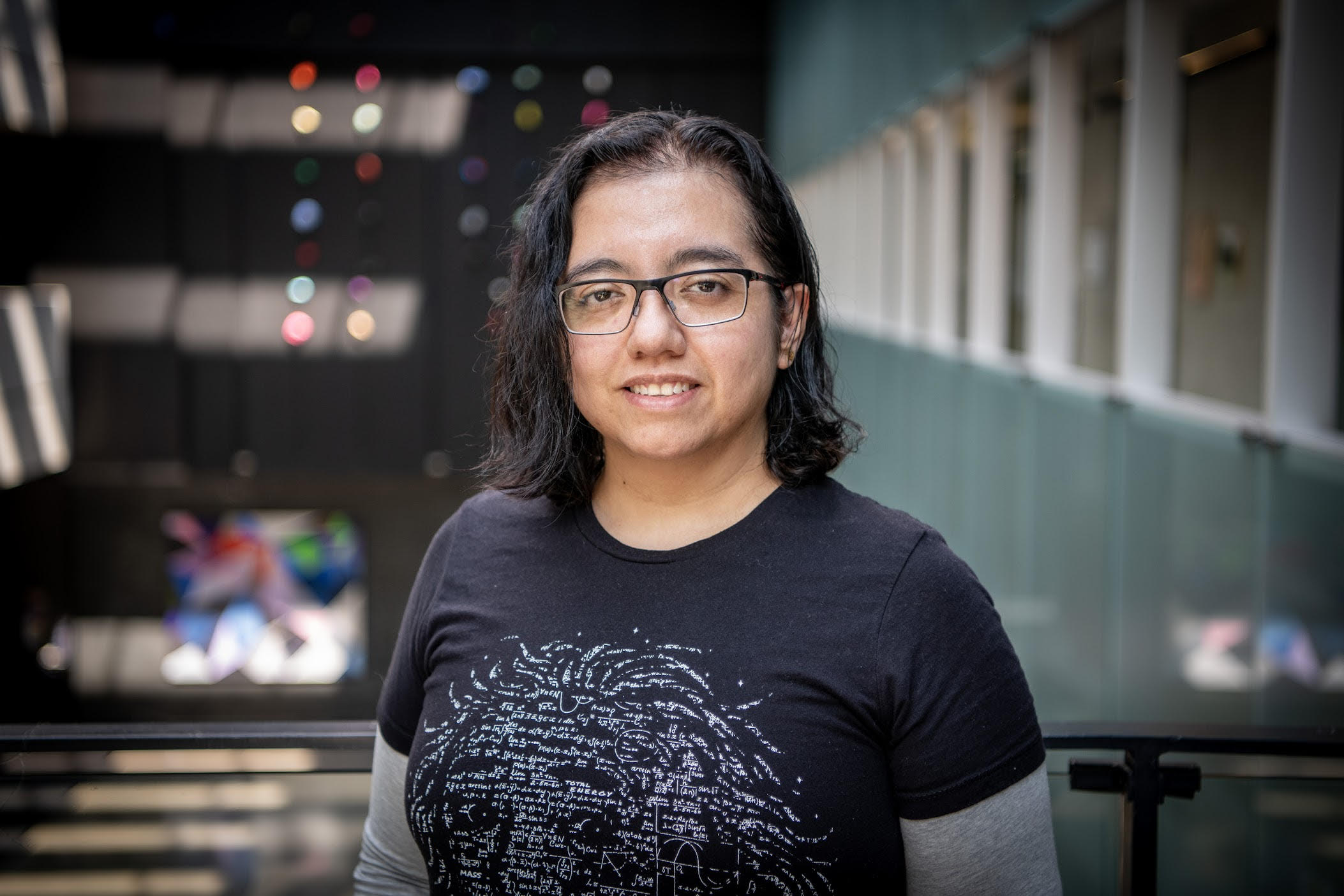
I'm especially grateful to Brian Hepler, PhD, for his exceptional teaching and to the QF Academy team, particularly Bamborde Balde, for providing such a high-quality learning experience. It's not often you find a course combining advanced theory with real-world quantum applications so effectively.
Claudia Zendejas-Morales
Physicist
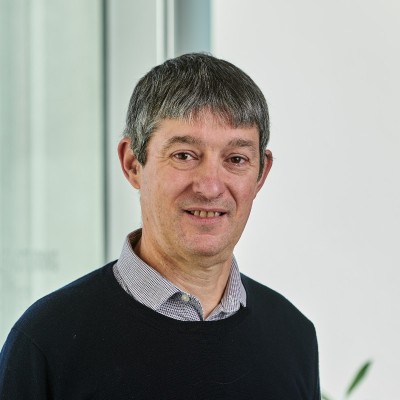
I gained valuable insights from completing a Quantum Formalism course on Group Theory, Topology and Manifolds - useful for my PhD in QML. My mentor Bamborde Balde met with me personally to tailor my study plan and made invaluable comments.
Daniel Goldsmith
Senior Quantum Technologist & PhD Researcher in QML

Thank you to Quantum Formalism for making abstract mathematics more accessible to industry-based researchers. It's been a rewarding experience exploring the different phases.
Senaka Samarasekera
AI ML Algorithms and Signal Processing Engineer

This course significantly improved my understanding of proof-based linear algebra, provided valuable feedback from PhD mathematicians, and enhanced my communication skills in a technical context.
Hanseul Kim
Deep Learning Researcher
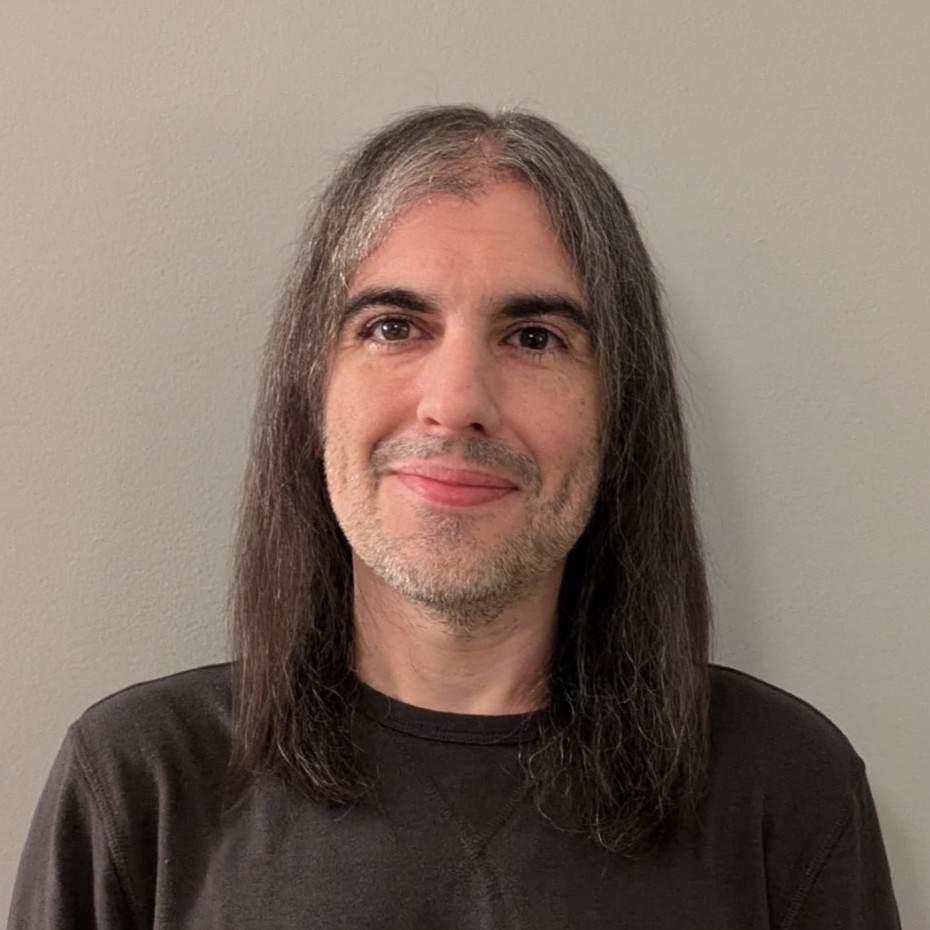
My first foray into proper metric topology while proving everything as we went. Everyone was very welcoming and enthusiastic. The end result was an incredibly rewarding experience.
Dave Jones
VP, Lead Software Engineer
I’m following Group Theory 360 and very much appreciate the Lie Theory and Cryptography-related examples.
I studied this material years ago, and it is wonderful to have the chance to refresh and update my knowledge and to see recent applications.
Eddie (Edward) Jennings
Chief Engineer, Scientist
Commercial Solutions for Classified
Solution Architect, Technical Fellow
Study Mathematics. Submit Work for Review.
Watching lectures is not the same as doing mathematics. At QF, you solve problems, write arguments, and receive feedback on submitted work.
Feedback from Mathematicians
You study with mathematicians and technical specialists who can evaluate proofs, spot gaps, and help you improve how you think and communicate.
Programmes Built Around Direction
QF programmes connect foundations to what you aim to read, build, or contribute to in AI, quantum computing, cryptography, physics, finance, and scientific computing.
Work Beyond Completion
Assignments, projects, mentoring, and selected public-facing work help others assess what you have done.
Join a Community Built Around Mathematics
QF brings together learners, researchers, engineers, and builders who want to study mathematics properly, not just consume content.
A Network for People Who Study and Build
As a member, you gain access to our Substack community of over 9,000 researchers, engineers, and lifelong learners. Discuss ideas, compare approaches, ask better questions, and learn alongside people applying mathematics in their work.
Explore Our CommunityFor Learners Who Want More Than Content
This is for learners who want structure, feedback, and reviewable work, not just another playlist of lectures.
Researchers
Strengthen the mathematical tools behind your research direction so you can read, test, and communicate ideas more clearly.
Graduate Students
Fill gaps, prepare for harder papers, and communicate mathematics more clearly as your thesis or research direction develops.
Industry Professionals
Move beyond implementation work by building evidence that you can handle harder technical material.
Lifelong Learners
Study with structure and feedback instead of collecting disconnected resources.
Not Sure Where to Start?
Book a free 45-minute discovery call to discuss your background, current level, and the field you want to move towards. We can explain how QF works and which starting point is likely to fit.
No pressure to enrol. The call is there to understand your preparation, the workload, and the most sensible starting point.
Schedule a Free 45-Minute CallFrom Onboarding to Submitted Work
A simple route from onboarding to study, submissions, feedback, and visible work.
-
1
Explore Programmes
Start from the programme, plan, or subject area that fits what you want to pursue.
-
2
Start Onboarding
Discuss your background, current level, available time, and target field with QF.
-
3
Get Access
Receive your login and entry point into the academy environment, programme materials, and study infrastructure.
-
4
Set the Study Route
Use onboarding and guidance from QF to shape a route that fits your preparation, target field, and available time.
-
5
Do the Work
Work through programme materials, problem sheets, assignments, workshops, and feedback cycles that build sound technical habits.
-
6
Show the Work
Turn completed work into projects, profiles, references, and clearer technical communication.
Turn Mathematical Study Into Evidence of Ability
QF helps learners turn mathematical study into evidence of ability through assessed work, projects, mentoring, and clearer technical communication.
Prepare for Research and Specialist Roles
Use mathematical preparation, mentoring, and network access to build credibility for research, applied science, and specialist roles.
Move Beyond Surface Implementation
Assignments, workshops, and feedback develop analysis, judgement, and proof-based communication.
Build a Public Record of Work
Use QF Academy profiles, projects, and selected public-facing work to show work that others can inspect.
The Specialisation Guarantee
QF offers a guarantee for learners who successfully complete a Specialisation programme. Complete the agreed route, including the required lectures, submissions, and assessed work, and the guarantee applies.
// How It Works
Applies to all Specialisation programmes after successful completion of the agreed route.
Our learners and community include people from organisations such as


Graduate students and researchers in the QF community have studied at universities such as









Ready to Plan Your Mathematical Route?
Start with the programme hub or book a discovery call. QF can help you decide whether foundational training, a focus track, an OCW-supported route, or a project-based specialisation should come first.